
A Fair Trade
how guilt became the price I paid for certainty

A few weeks ago, while looking for something else on the top shelf in my closet, I came across a notebook filled with handwritten prayers from my college years. The subject of each prayer varied wildly, and ranged from friendships and complicated break ups to upcoming exams and decisions that would affect my life post-graduation. I skimmed through them, filled with nostalgia and compassion — and a little heartache — for the version of myself that came to life on that Oklahoma campus where the sweeping wind felt like freedom.
Then, about halfway through the notebook, I came across this prayer:
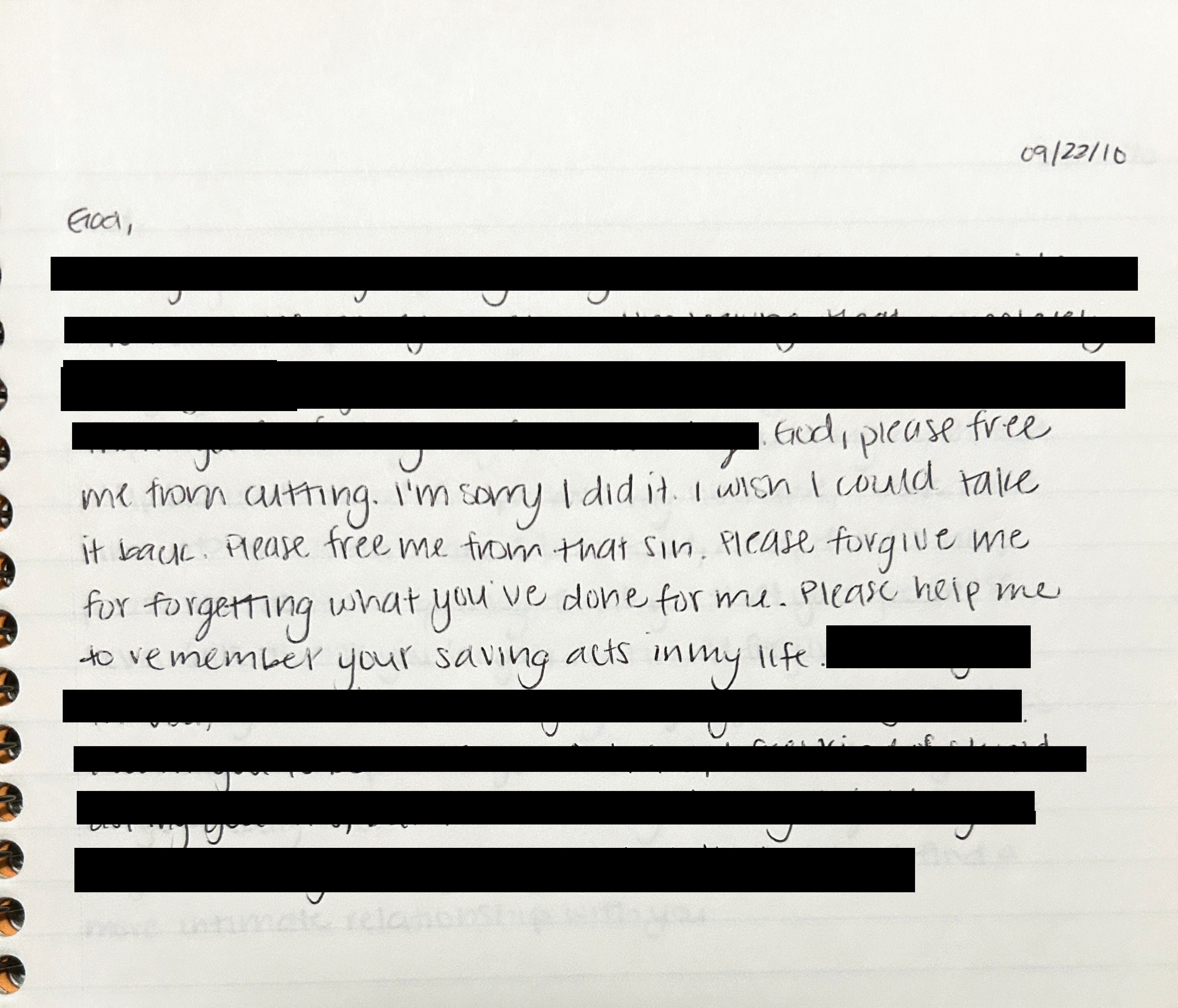
Dated one month into my sophomore year, the words my nineteen year old self wrote were desperate and genuine. I’d been told by people I trusted that my self-injury was a form of idolatry. That such a serious struggle was evidence that I didn’t trust God. That it was sin, through and through.
There was a part of me that believed them. Their explanations offered me certainty I wasn’t able to come by on my own.
I couldn’t explain why my brain conflated harm with healing. If the connection between the two was caused by something I was doing — something I was actively choosing — then it was something I could control. Wearing that guilt as a weighted vest gave me something to fix.
It seemed clear to the people in my circles: This was a voluntary spiritual failing. No one ever suggested there might be something else going on. No one ever told me the darkness I was fighting might be something outside of my control.
Twenty years later, I’ve not only learned that my struggle isn’t inherently spiritual in the ways they not-so-subtly implied, but also that I can’t outwork my brain. No matter how hard I try, how many coping skills I use, or therapy appointments I show up for, I can’t change the wiring or the natural chemicals that cause me to drift toward self-destruction.
The question then becomes not “How can I fix this?” but “How can I best support myself given the way I am naturally wired?” For someone who likes clear solutions and permanent fixes, it’s a difficult shift. In spite of the difficulty, there is mercy in being able to set down the exhausting and impossible work of trying to repent my way out of something that was never rebellion.
I considered ripping that prayer out, tossing it into the trash along with the bad theology I’d been handed. It’s hard for me to look at that younger version of myself, so hungry for answers that overwhelming guilt felt like a fair trade. I want to protect her from the harm that had already happened, from the harm I now know was yet to come. But destroying evidence has never changed what occurred.
Instead, I left the prayer where it was, tucked among pages filled with the other hopes, fears, and questions I was holding as I tried to find my way in the world — a reminder of what I once believed and how badly I wanted to be free. I know more now than I did then. I wish she had, too.
In this with you,
Brittany
Brittany,
As a male in my late 60s suffering from >50 years of constant chronic pain......
I get it.
Sometimes the feeling of having control can be even more crucial to survival than relief itself.